
Mario Nawfal’s Election Post Became a Social Market
TL;DR: Mario Nawfal’s Michigan Senate question became a Kash social market. Ten accounts outside the Kash team placed bets through replies; the market recorded 38 trading addresses across 564 trades, including automated and liquidity accounts.
On November 3, Mario Nawfal put a Michigan Senate question in front of his audience: “Will Abdul El-Sayed defeat Mike Rogers in Michigan’s 2026 U.S. Senate election?”
The post opened a conversation people could put money behind. Powered by Kash, the question became a social market, with Yes and No positions and a price that changed as people traded.
The reply became the action
Ten accounts outside the Kash team placed bets by replying to the post. These were existing accounts, and the replies resulted in executed trades on this market.
That is the useful detail. A reader could encounter Mario’s question and express a position in the same conversation. The social post was both the place the question travelled and a way to participate.
By November 4 at 12:38 UTC, X had recorded 44,180 impressions on the announcement. Impressions count displays, including repeat views; they are not unique readers. The reply-betting figure measures a different thing: accounts that actually participated through replies.
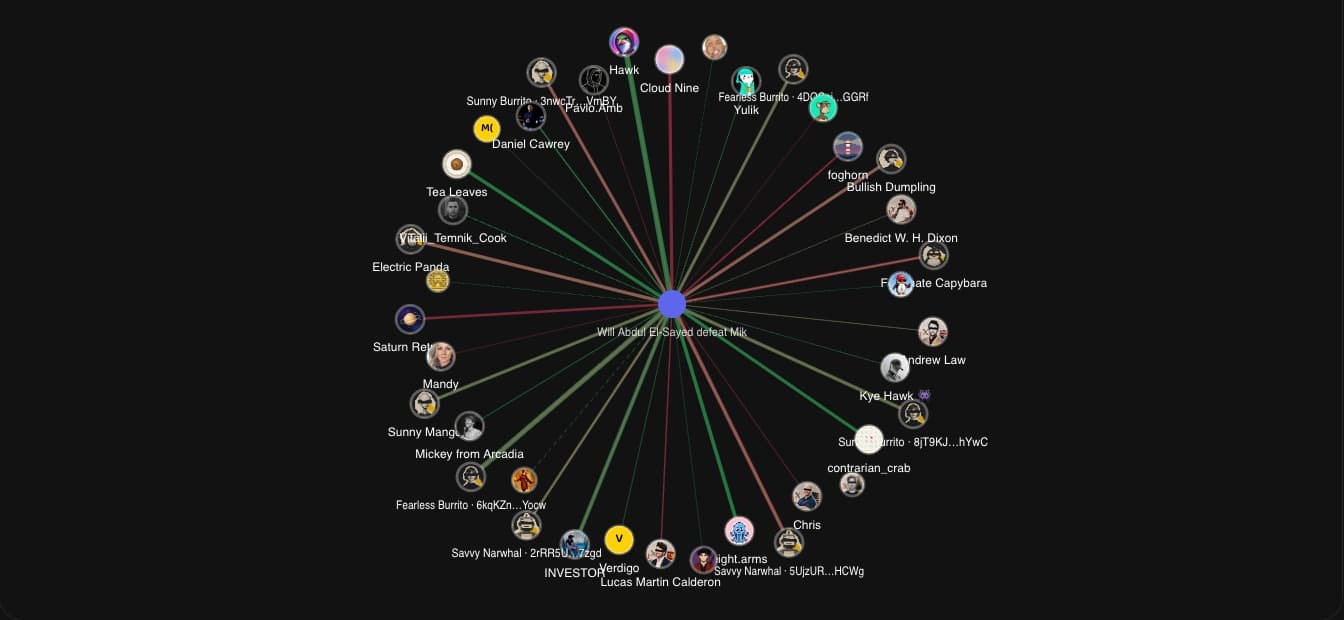
Mario’s market in Kash Analytics: all 38 trading addresses and 52 trader–outcome connections. Includes automated accounts and Kash liquidity accounts. Connections represent traded turnover, not net positions or audience size. Captured November 4.
A conversation with a changing price
The market’s displayed Yes implied chance moved from 50% to around 79% during its trading window.
The distinction matters. A moving market gives a conversation a visible record of changing positions. It does not tell us that every trade came from a different person, or that the price proves who will win. Automated market-making contributed to activity here, so headline trading volume would overstate organic audience demand.
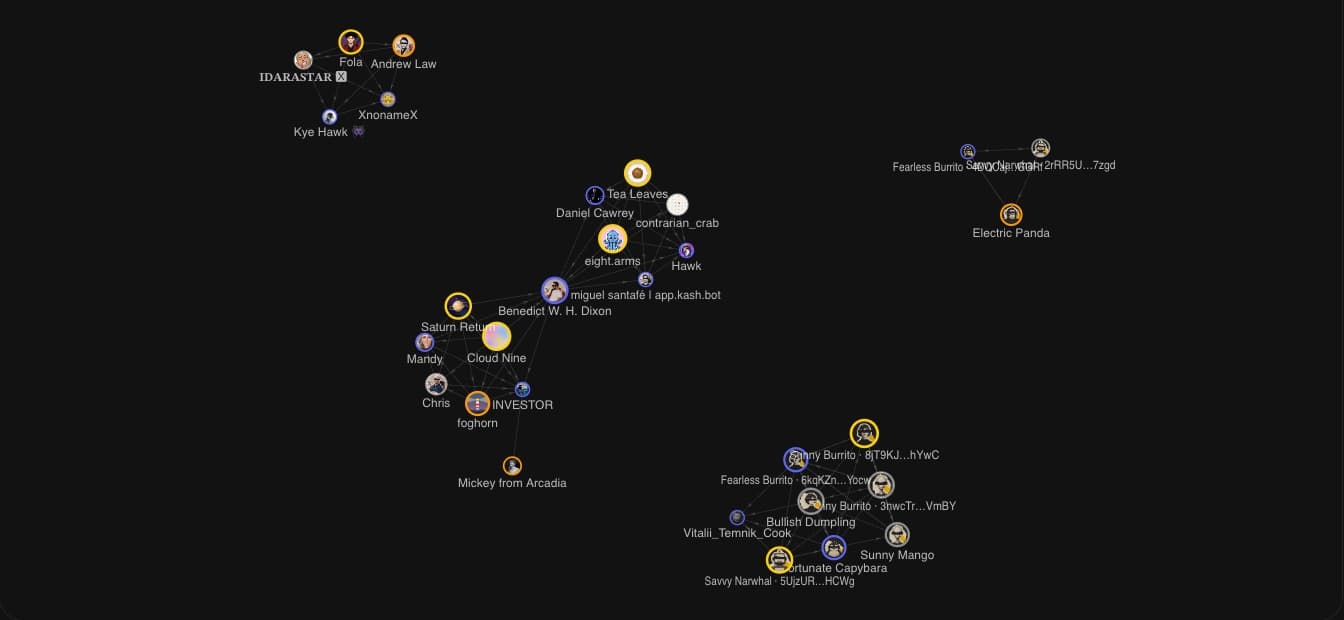
Another view of the same market: addresses connected when their first trades on the same outcome occurred within 30 minutes. These are timing relationships, not proof that one trader influenced another. Automated and Kash liquidity accounts are included. Captured November 4.
A new format for the question already in the feed
Mario’s post shows a concrete use for social markets: start with a question your community already cares about, let people take a side, and keep participation connected to the conversation.
Kash gives that question a market, a changing price, and a result to settle against.